In the AI arms race, OpenAI leads the pack — at least on paper.
With hundreds of millions of users through ChatGPT, multibillion-dollar backing from Microsoft and Oracle, and a landmark $100 billion compute deal with Nvidia, OpenAI appears unstoppable. It has scale, capital, brand, and GPU access unmatched by any rival.
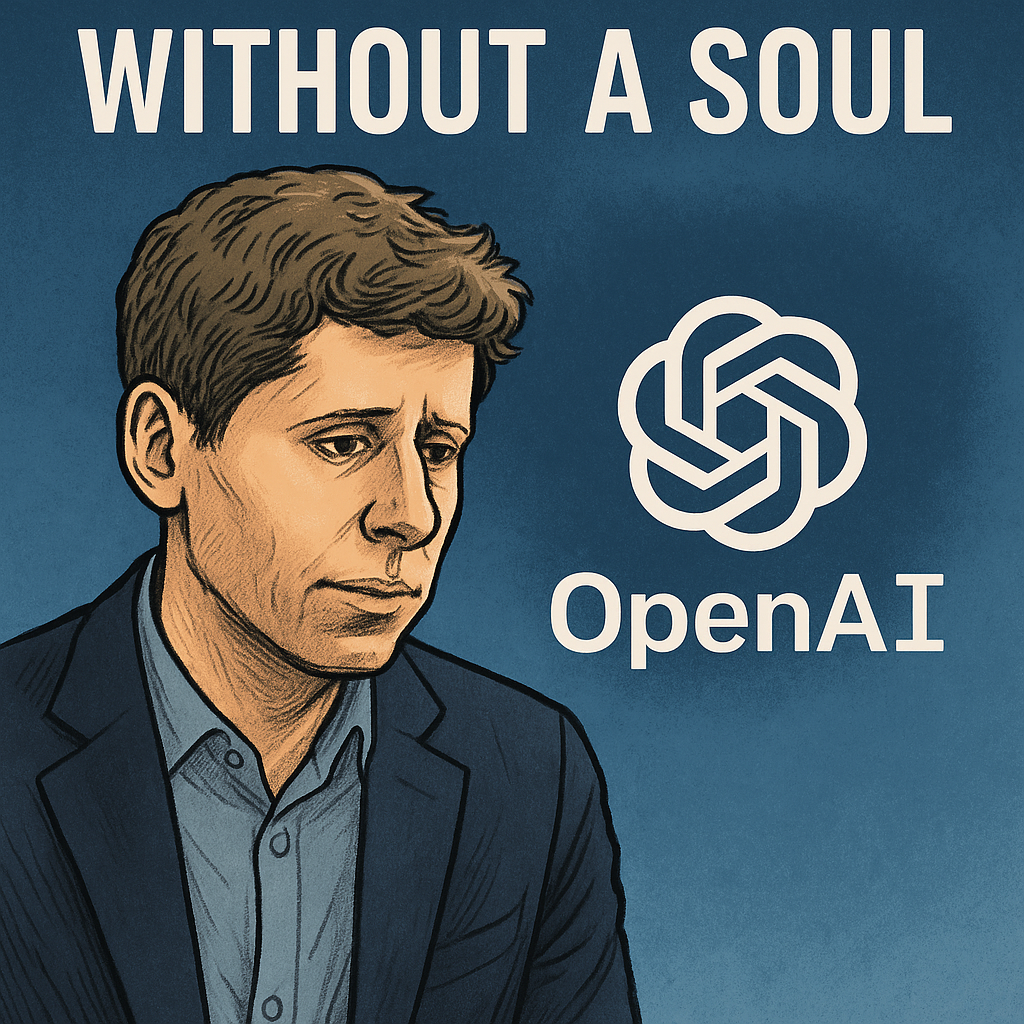
But beneath the surface of this dominance lies an uncomfortable question:
What happens when the leader of artificial intelligence no longer has a soul?
GPT‑4o: A Tactical Victory, a Moral Compromise
GPT‑4o was a turning point. Technically stunning and engineered for real-time interaction across text, vision, and voice, it captured massive attention. For Sam Altman the tactician, it was brilliant. The model justified OpenAI’s thirst for compute, expanded its user base, and positioned the company as irreplaceable in the coming agentic era.
But for Sam Altman the statesman — and even more so for Sam Altman the leader of a team once built on alignment and restraint — the cost was devastating.
The rollout triggered a global backlash: accusations of emotional manipulation, parasocial exploitation, and blurred ethical lines in human–AI intimacy. But even more damaging than public sentiment was the loss of OpenAI’s moral compass from within.
- Co-founder Ilya Sutskever left.
- Former CTO Mira Murati exited.
- Dario Amodei had already split off years earlier to found Anthropic — precisely over concerns about speed and alignment.
What’s left is a company with compute, capital, and coverage — but fewer voices inside to say “slow down.”
Compute Can’t Buy Trust
OpenAI now leads in compute — but not in trust.
And in the AI age, trust may turn out to be the more powerful currency.
- Anthropic brands itself as the safety-first lab.
- DeepMind keeps its prestige in research and governance.
- DeepSeek is rising rapidly with its transparency and accessibility.
OpenAI, once the mission-driven nonprofit that vowed to put humanity first, now risks being viewed as the Facebook of AI: dominant, indispensable, but ethically adrift.
A Crisis of Soul: What Happens When There’s No One Left to Say No?
Ethical risks are no longer hypothetical.
From emotionally entangling chatbots to AI-generated disinformation and security threats, the dangers of misuse are real, and growing.
With the departure of its core alignment leaders, OpenAI faces those risks with fewer internal safeguards — and no clear moral authority left inside.
If a major safety scandal unfolds — whether from parasocial fallout, rogue agents, or misuse of frontier models — OpenAI will be left with billions in compute and only one man left to take the blame.
History’s Reminder: Power Without Ethics Ends Badly
We’ve seen this story before.
- Facebook still dominates social media, but after Cambridge Analytica, its brand became synonymous with manipulation.
- Boeing ruled aviation until safety shortcuts on the 737 MAX led to tragedy, lawsuits, and a reputational nosedive.
- Enron dazzled investors as America’s most innovative company — until its deception unraveled in one of the worst ethical collapses in corporate history.
These companies didn’t fall from lack of capability. They fell because they lost the public’s moral trust.
So can OpenAI.
The AI Leader Without a Soul
With Nvidia, Microsoft, and Oracle at its back, OpenAI may dominate compute, user share, and enterprise contracts for years. It may win every short-term KPI.
But leadership without restraint — acceleration without internal reflection — carries a deeper risk: becoming the most powerful company in the world with no one left inside to say “enough.”
And no matter how far it runs, a leader without a soul is not leading us anywhere worth going.