
In a move that signals a broader recalibration of its AI portfolio, Microsoft has inked a new deal with Anthropic to gain access to its foundation models—a development that marks a subtle but strategic diversification away from its long-standing reliance on OpenAI.
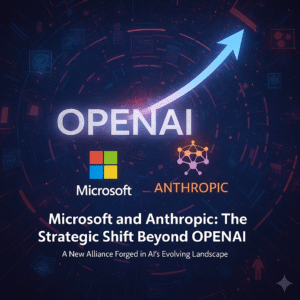
Preparing a Plan B: Expanding Beyond OpenAI
For years, Microsoft has been the most visible partner of OpenAI, investing billions and tightly integrating models like GPT into products ranging from Microsoft Copilot to Azure OpenAI Service. This partnership has positioned Microsoft at the forefront of the generative AI wave. However, the recent agreement with Anthropic underscores a shift: Microsoft is hedging its bets.
This doesn’t mean an end to the OpenAI alliance. Rather, it reflects a pragmatic understanding of the evolving AI landscape. By securing access to Claude models from Anthropic, Microsoft ensures it won’t be solely reliant on one AI provider—a risk increasingly evident in the high-stakes race for dominance in the AI arms race.
Anthropic’s Role: The Quiet Challenger
Anthropic, founded by former OpenAI researchers, has emerged as a serious contender in the foundation model ecosystem. Its Claude family of models emphasizes safety, constitutional AI principles, and explainability. These features align with growing enterprise demand for not just powerful but predictable and controllable AI behavior.
By purchasing access to Anthropic models, Microsoft not only diversifies technically but signals support for a more pluralistic AI ecosystem—one that values checks and balances over monopolistic dependence.
Strategic Leverage: Microsoft Holds the Upper Hand
While both Microsoft and Anthropic benefit from the deal, it’s clear which party holds the strategic advantage. Microsoft isn’t just a model consumer; it’s the infrastructure kingmaker. Azure remains a key cloud provider not only for OpenAI but also now for Anthropic, cementing Microsoft’s role as the AI era’s infrastructural backbone.
This dual investment strategy allows Microsoft to keep OpenAI in a subordinate position—grateful for compute, funding, and product integration opportunities—while subtly reminding them that alternatives exist. Anthropic becomes both a technical asset and a bargaining chip.
A Soft Power Play
Rather than confronting OpenAI with competitive hostility, Microsoft employs soft power. By embracing Claude while continuing to elevate GPT, it avoids alienating OpenAI while keeping the balance of power in its favor. This is not a betrayal; it’s insurance. And more importantly, it’s leverage.
In corporate diplomacy, overt threats are less effective than quiet recalibrations. Microsoft’s move ensures that it maintains strategic flexibility without triggering alarm bells about internal fragmentation.
Implications for the AI Market
This diversification sends a signal to the broader AI ecosystem: even the most entrenched alliances are open to realignment. As AI models become increasingly commoditized, access, integration flexibility, and ecosystem interoperability become the true battlegrounds.
Enterprise clients, developers, and governments will be watching closely. If Microsoft can offer multiple best-in-class models via Azure, it may set a precedent for AI platform neutrality—positioning itself not just as OpenAI’s distributor but as the Switzerland of AI deployment.
Conclusion: Microsoft’s Strategic Poise
The deal with Anthropic doesn’t signify a falling out with OpenAI. It signals maturity. Microsoft is playing the long game, constructing a resilient, multi-vendor AI strategy that avoids the pitfalls of vendor lock-in.
In doing so, it reminds us that in the age of AI, power isn’t just in the models—it’s in the infrastructure, the access, and the ability to shape the field without needing to dominate it openly.
For Microsoft, this is not an either/or. It’s an and. And in the delicate geopolitics of artificial intelligence, “and” is the most powerful word of all.