
1. The Opening Specter: Blaji’s Ghost
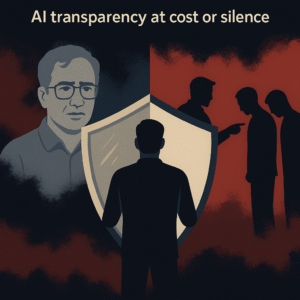
Blaji Srinivasan’s departure from OpenAI ended in controversy and whispers. As a whistleblower raising concerns about training data integrity and the lack of third-party audits, his voice was never fully heard. His sudden, tragic death only amplified speculation, leaving behind a ghost that refused to rest.
In response, OpenAI leaned on public messaging: reaffirming its nonprofit roots, introducing a Public Benefit Corporation (PBC) framework, and projecting an image of alignment. But to many, these were not deep reforms. They were narrative shields—an attempt to contain a haunting reminder that ethics, when ignored, will return darker and louder.
2. OpenAI: Paper Ethics and the Investor Lens
Behind the narrative lies a corporate reality.
- Core pressure: compute access locked to Microsoft, a $6–8B annual burn rate, and capital dependency (SoftBank, governments).
- Weak point: training data opacity, lawsuits, and growing regulatory scrutiny.
The timing of OpenAI’s “ethical reaffirmations” reveals more than altruism. These moves were less about structural change and more about restoring investor confidence. For OpenAI, survival required patching the narrative after a crisis—so that another “Blaji moment” would not spook markets or stall funding.
3. xAI: Grok’s Purge as Preemptive Discipline
xAI, by contrast, moved before any ghost appeared. The sudden shake-up of Grok’s annotation team carried no public scandal, but the message was unmistakable: dissent will not be allowed to ferment.
Why purge without explanation? Observers point to the Blaji effect. Better to silence uncertainty now than manage a whistleblower later. This was not cleanup—it was a surgical strike. A preventive warning shot.
4. Two Strategies, One Fear
- OpenAI patched narrative gaps after a ghost emerged.
- xAI enforced discipline to ensure no ghost could form.
Different tactics, same undercurrent: fear of transparency.
Neither company has opened its training datasets to independent audit. Neither has committed to verifiable data provenance. Both rely on control—one through narrative, the other through preemption.
5. The Unanswered Question
Which strategy is less dangerous in the age of AI scrutiny?
- A nonprofit mask that soothes the public while keeping the vault sealed?
- Or a purge that guarantees silence before questions can be asked?
Perhaps neither. A third path remains: real transparency.
That means public audits, clean-sourced datasets, and regulatory frameworks that prevent either ghosts or purges from being the default response.
Analyst’s Note
From a strategic lens:
- Investor pressure: Both OpenAI and xAI act under extreme capital constraints. Narrative shields reassure markets; purges reassure internal cohesion.
- Regulatory vacuum: Without external standards, each company designs its own accountability theater.
- Risk: Neither model is sustainable. Ghosts erode trust, purges erode talent.
Bottom line: Fear is not governance. Transparency is. The question is whether any AI giant has the courage to walk that path before being forced into it.